Privacy Issues Arising From Age Verification, Payments, and Viewing History Management on Adult Media Services
Age-verification rules for adult content are expanding, but they differ by jurisdiction. Texas and Virginia require certain commercial websites containing substantial material harmful to minors to verify that visitors are adults. The US Supreme Court upheld the core Texas requirement on June 27, 2025. In the United Kingdom, pornography services must use “highly effective age assurance” under the Online Safety Act. The EU approach under the Digital Services Act relies on guidance and privacy-preserving age-verification tools rather than one universal ID-upload method.
Privacy risk depends on what is collected, who processes it, how long it is stored, and whether the platform receives a full identity record or only an over-18 result. Payments and viewing logs create separate data trails.
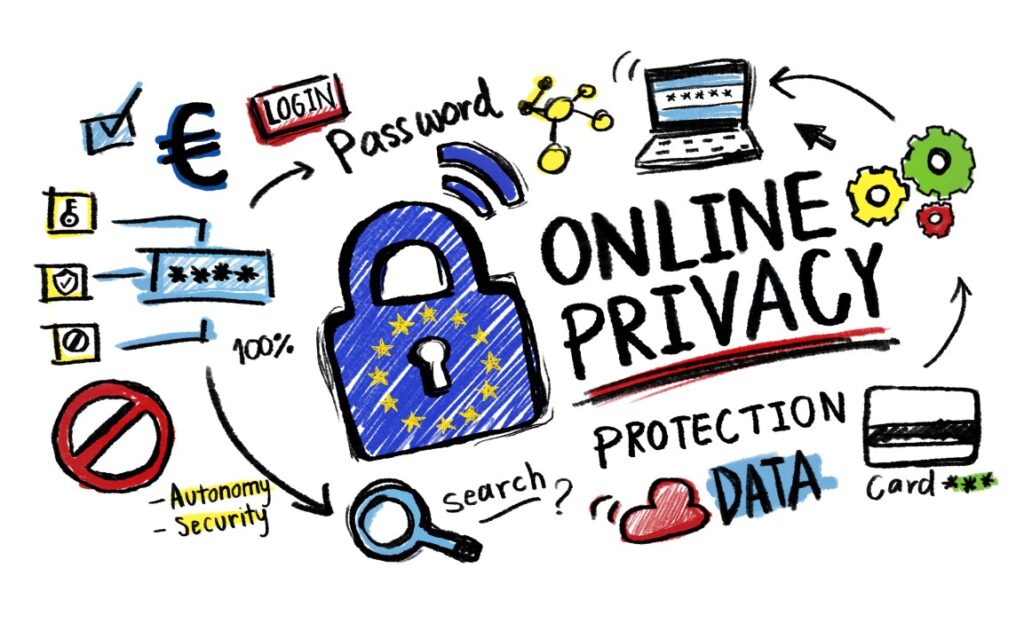
Privacy Risks You Face When Using Adult Services
An adult media service may create records on the user’s device and on systems operated by the platform, an age-assurance provider, a payment processor, or an analytics company.
Legal Identity Exposure: A direct link can form when an ID image, legal name, birth date, facial image, email address, and account identifier are processed together. Some systems reduce this risk by returning only an adult-status result.
Financial Record Exposure: Card payments leave records with the merchant, processor, card network, and issuer. A neutral billing descriptor may make a charge less obvious, but it does not make the transaction anonymous.
Behavioral Tracking: Records may include searches, pages viewed, watch events, timestamps, IP addresses, cookies, and device data. A 2019 study of 22,484 pornography websites found that 93% sent user data to at least one third party.
Breach, Misuse, and Reputational Harm: Exposed or misused records may lead to scams, harassment, doxxing, account takeover, or reputational harm, especially when identity data is linked to viewing activity.
The Danger of Mandatory Age Verification Regulations: Why Uploading IDs and Face Scanning Are Risky
Age assurance is broader than ID upload. Ofcom lists methods including open banking, photo-ID matching, facial age estimation, mobile-network checks, credit-card checks, digital identity services, and email-based estimation.
Third-Party Verification Weaknesses: Outsourcing does not always mean raw documents are stored permanently. A provider may process data briefly and send only an age result. Users should still identify who receives the data, whether images or derived records are retained, and whether they can be reused. UK guidance requires data minimization, purpose limitation, storage limitation, and security.
Irreplaceable Biometric Data: Facial age estimation predicts an age range; facial recognition identifies or verifies a person. A facial image remains sensitive, especially if images, templates, or account identifiers are retained. Look for clear statements about deletion, human review, model training, and reusable biometric templates. Some AI-based age-assurance methods may involve biometric data and require additional protection.
Persistent Identification Hash Tokens: Hashing does not automatically make data anonymous. A stable token may enable correlation if reused across services or stored with identifying information. Scoped, unlinkable, or short-lived proofs are safer than one persistent identifier.
Leakage Risks From Viewing History and Personal Payment Data
Payment and activity records often provide the clearest connection between a person and a service.
Paper Trails from Cards and Payment Processors
Card purchases are recorded by financial institutions and payment companies. They are not public, but may be visible to joint account holders, authorized users, issuers, processors, and legally entitled parties.
A virtual card can protect the main card number if a merchant is breached, but the issuer still knows which account funded the payment. Prepaid products may also require identity verification or remain linked to an account.
Algorithmic Tracking of Viewing Behavior
Browser history, account history, platform logs, cookies, and third-party analytics are separate records. Deleting local browsing history does not remove information already stored by the platform. Private-browsing mode mainly limits the data saved on the user’s device.
Tracking scripts, cookies, pixels, and device-fingerprinting tools may collect page views, clicks, form interactions, advertising identifiers, and information about how a visitor uses a website. On an adult media service, even a page title, search term, or content category may reveal sensitive interests. Users should reject nonessential cookies where possible, review the service’s privacy settings, and avoid remaining signed in on shared devices.
Consequences of Users Attempting to “Bypass” Age Verification
Trying to evade a lawful age check can create legal, security, and account risks. Use a legitimate privacy-preserving option offered by the service or avoid services with unacceptable data practices.
Using Unsafe Free VPNs: Not every free VPN is unsafe, and VPNs normally encrypt traffic between the device and provider. However, a VPN shifts trust from the ISP to the VPN company. Review ownership, logging policy, independent audits, updates, and the official download source. CISA notes that personal VPNs can shift residual risk rather than eliminate it.
Purchasing or Creating Fake IDs: Forged, borrowed, or stolen documents may create legal liability. Sellers and fake-ID tools may also be phishing operations seeking payments, documents, or device access.
Installing Unverified Browser Extensions: Extensions can request permission to read or change website data. A tool with broad access may view page content, form entries, cookies, or browsing activity. Install only necessary extensions from trusted sources.
New Encryption Technologies for Safe Content Viewing Without Identity Exposure
Privacy-enhancing technology can reduce identity disclosure, but network data, accounts, payments, and viewing logs still require separate protection.
Zero-Knowledge Proofs (ZKP)
A zero-knowledge proof can show that a statement is true without revealing the underlying data. It may prove that a user is at least 18 without disclosing a name, document number, or exact birth date. The European Commission’s age-verification solution follows this approach.
A ZKP does not provide complete anonymity. The website may still see an IP address, cookie, account identifier, or payment record.
Decentralized Digital Identity (dID)
Wallet-based verifiable credentials let a user present a digitally signed claim from a trusted issuer. With selective disclosure, the wallet can reveal only the required fact, such as being over 18.
“Decentralized” does not mean every system uses a blockchain, stores everything only on a phone, or creates a self-destructing token. Privacy depends on whether presentations are unlinkable and whether stable identifiers are disclosed.
Next-Gen Private Payment Methods
Privacy-Focused Cryptocurrencies: Cryptocurrency is not automatically anonymous. Privacy-enhancing coins may reduce on-chain visibility, but exchanges, gateways, wallets, devices, and network metadata may still link a transaction to a person. Legal and tax rules also vary.
Disposable Virtual Cards: A single-use or merchant-locked number can isolate the primary card number. It does not erase the issuer’s record or separate the transaction from the verified account.
Does Using a VPN Truly Protect Your Privacy?
A VPN improves network privacy but is not a complete identity shield.
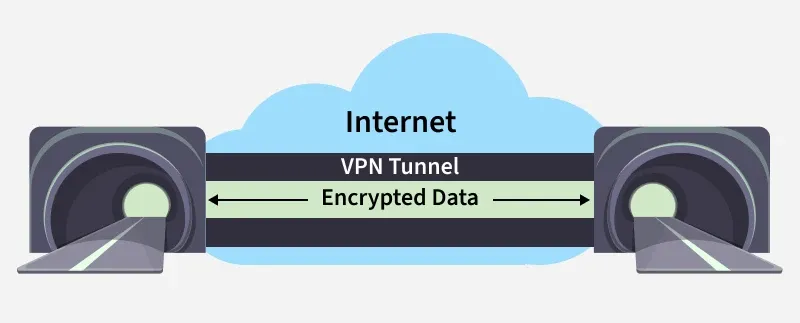
What a VPN CAN Protect:
A VPN can hide the home IP address from the destination website.
It encrypts traffic between the device and VPN provider, reducing what a local Wi-Fi operator or ISP can inspect.
It can reduce simple IP-based location inference, although cookies and account data may still reveal clues.
What a VPN CANNOT Protect:
A VPN cannot hide an identity disclosed through an ID, facial verification, email account, or profile.
A VPN does not remove card, bank, wallet, or payment-processor records.
A VPN does not erase logged-in activity or stop cookies, fingerprinting, and server-side logs.
VPN Bottom Line: A VPN protects the connection layer. Its value depends on the provider’s logging and security practices, and it must be combined with careful account, payment, and tracking choices.
Privacy risks on adult media services come from age assurance, account identifiers, payment records, browsing data, analytics, and retention policies. Age-verification laws may restrict minors without requiring every system to collect a complete identity profile. Exercise Extreme Caution: Identify the verification provider, data requested, retention period, and information returned to the platform. Prefer methods that disclose only an age result.
Isolate Financial Channels: A virtual card or separate payment account may protect the primary card number, but it does not make the purchase anonymous. Review billing, refunds, and fraud protections. Maintain Strict Digital Hygiene: Use a unique password, enable two-factor authentication, limit extension permissions, reject nonessential trackers, and update the browser and device. Clearing local history does not delete server-side data, so use account controls or a formal deletion request where available.