Differences Between Creator Memberships, Recurring Fan Subscriptions, and One-Time Donations
Creators can receive direct financial support through one-time payments, recurring subscriptions, and structured membership programs. These options are often presented as three separate business models, but the boundaries are not always clear.
A membership is usually paid through a recurring subscription. The word “membership” describes the relationship, benefits, or community being offered, while “subscription” describes how the supporter is billed. Platforms also use different names for similar features. YouTube calls its program Channel Memberships, Twitch calls recurring channel payments subscriptions, and Patreon refers to paying supporters as members.
One-time donations or tips are easier to distinguish because they do not renew automatically. They allow a supporter to make a single payment without committing to another charge. The right setup therefore depends less on the label used by a platform and more on three practical questions: Does the payment renew, what does the supporter receive, and how much ongoing work must the creator provide?
Core Differences Between the Three Creator Monetization Models
The three models can be separated by payment structure and supporter expectations:
One-Time Donations / Tips: A supporter makes a single payment. There is no automatic renewal and usually no promise of continuing access. The payment may reward a specific video, article, livestream, release, or project.
Recurring Fan Subscriptions: The supporter is charged on a repeating schedule, usually monthly or annually. The payment may provide access to premium content, early releases, archives, newsletters, podcasts, or other continuing benefits.
Creator Memberships: A membership is a structured supporter program that may combine recurring billing with community access, recognition, content, events, and other benefits. It can be operated through a content platform, a membership service, or a creator’s own website.
The distinction is functional rather than universal. YouTube Channel Memberships use recurring monthly payments and can include badges, custom emoji, and members-only content. Twitch subscriptions are also generally monthly recurring products and may include emotes, badges, subscriber-only chat, or other channel benefits. Discord Server Subscriptions can provide paid tiers with different prices and perks.
Creators should also be careful with the word “donation.” A payment to an individual creator is normally better described as a tip, contribution, or support payment unless it is being collected by a qualified charitable organization. In the United States, gifts to individuals are not tax-deductible charitable contributions.
Understanding Creator Memberships: Selling Experiences and Community Connection
Creator memberships work best when supporters want more than access to files or posts. They may want recognition, closer participation, community access, or a stronger connection with the creator’s work.
Nature of Exchange: The supporter joins an ongoing program. Payment may unlock content, but the broader value often comes from belonging to a defined group and receiving continuing benefits.
Typical Perks: These can include loyalty badges, custom emoji, private discussion channels, member posts, livestreams, voting rights, behind-the-scenes updates, office hours, discounts, or early access.
YouTube allows creators to offer membership levels with perks such as badges, emoji, and members-only videos. Twitch subscriptions may include subscriber badges, emotes, subscriber-only chat, and ad-free viewing when the creator enables it. A creator can also connect eligible YouTube memberships to Discord and provide members with access to restricted channels or roles.
Ideal Creator Profile: Memberships are suitable for streamers, YouTubers, community hosts, educators, and other creators whose audiences regularly interact with one another. They are less suitable when the creator cannot moderate a community or consistently provide the advertised benefits.
A membership does not have to be tied to one major content platform. Patreon and Ko-fi both support tiered memberships, while Discord offers its own Server Subscriptions in supported cases. The important distinction is not where the program operates, but whether the supporter receives an ongoing membership experience.
Understanding Recurring Fan Subscriptions: Unlocking Content and Building Stable Revenue
Recurring subscriptions are designed around continuing access. A supporter is charged automatically until the subscription is canceled, expires, or fails because of a payment problem.
Nature of Exchange: The supporter pays for a continuing product, service, or body of work. Access may end at the close of the paid billing period after cancellation.
Typical Perks: Examples include premium newsletters, full podcast episodes, research reports, downloadable resources, extended videos, serialized fiction, tutorials, templates, and archives.
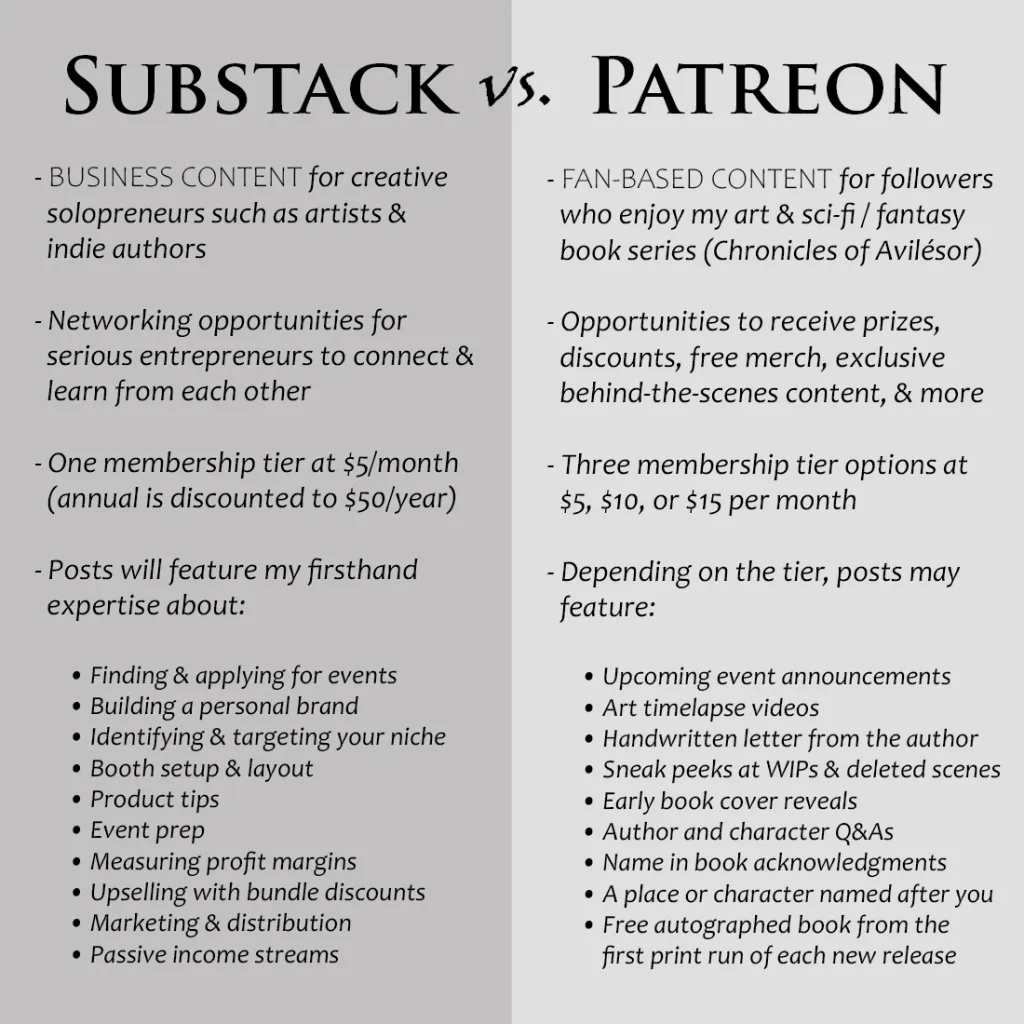
Patreon supports recurring membership billing, including models in which members are charged when they join and again on the same calendar date each month. Substack allows readers to upgrade from free access to a paid subscription for a publication. Ko-fi can restrict posts and other content to monthly supporters or specified membership tiers.
Ideal Creator Profile: This model suits writers, podcasters, educators, researchers, digital artists, and other creators who can release useful material on a reliable schedule.
Recurring payments may make income easier to forecast than isolated tips, but they are not guaranteed revenue. Members can cancel, payments can fail, and audiences may leave when benefits become inconsistent or no longer feel worth the price. Creators should plan around net revenue after platform charges, payment-processing costs, refunds, taxes, and failed transactions rather than treating every active subscriber as permanent income.
Understanding One-Time Donations / Tips: Low Barrier to Entry, Quick Cash Flow
One-time support is the simplest model for both the creator and the audience. A supporter pays once and is not automatically charged again.
Platforms such as Ko-fi and Buy Me a Coffee support one-time tips or support payments. Buy Me a Coffee states that a supporter can make a one-time payment without creating an account, while Ko-fi provides buttons and widgets that can be embedded on a creator’s website or blog.
Nature of Exchange: The payment is usually a gesture of appreciation rather than a purchase of continuing access. However, creators should clearly state whether a payment includes a specific reward, commission, product, or service.
Typical Perks: A thank-you message, livestream alert, public acknowledgment, downloadable item, or other limited reward may be offered. The creator should avoid implying that every tip guarantees personal attention unless that promise can be fulfilled.
Ideal Creator Profile:
Early-stage creators who are not ready to manage recurring benefits.
Creators who keep most or all of their work freely available.
Open-source developers, tutorial creators, podcasters, artists, and community contributors who want an optional support method.
Creators raising money for a clearly described project or production expense.
One-time support creates less ongoing pressure, but it is difficult to predict. A popular release may generate many payments in one week and almost none the next. It should not be treated as dependable monthly income unless the creator has enough historical data to show a consistent pattern.
Fan Psychology: Why Do Supporters Choose Monthly Subscriptions vs. One-Time Tips?
Supporters do not all pay for the same reason. Some are responding to a single piece of work, while others want continued access or a closer relationship with the creator.
Why do fans choose One-Time Donations?
Immediate Appreciation: A viewer may have just watched a useful video, downloaded a free resource, or enjoyed a livestream and wants to respond at that moment.
No Recurring Commitment: The supporter can contribute without adding another automatic monthly charge.
Flexible Spending: A one-time payment works better for people who support several creators or whose available budget changes from month to month.
Project-Based Support: A supporter may want to help fund one album, report, event, piece of equipment, or creative release without joining a continuing program.
Why do fans choose Subscriptions or Memberships?
Continued Access: The supporter regularly consumes the creator’s work and wants premium posts, archives, early releases, or other recurring benefits.
Community Participation: Badges, private channels, live discussions, and member events can make supporters feel more involved.
Reliable Support: Some fans care about the creator’s continued output and prefer to provide predictable funding.
Convenience: Automatic renewal removes the need to make a new payment after every release.
These motivations can overlap. One member may primarily want exclusive content, while another pays the same amount simply because they want the creator to continue publishing.
Comparing the Pros and Cons of the Three Models Side-by-Side
The table below treats memberships as structured recurring programs while recognizing that they are commonly billed through subscriptions.
| Comparison Criteria | One-Time Donations | Recurring Subscriptions | Creator Memberships |
|---|---|---|---|
| Financial Stability | Irregular and difficult to forecast | More predictable while subscribers remain active | More predictable, but dependent on renewals and continued engagement |
| Content Production Pressure | Usually low unless a reward was promised | High when subscribers expect frequent premium releases | Moderate to high because benefits and community access must be maintained |
| Fan Payment Barrier | Low because there is no renewal | Moderate because the payment repeats | Moderate because supporters assess both the recurring price and the value of the program |
| Retention Rate | Not applicable to a single payment | Varies by content quality, price, and release consistency | Varies by benefits, community health, platform experience, and creator involvement |
| Reach New Audiences | Most content can remain public | Paywalled content may reduce public discovery | Public content can attract viewers while selected benefits remain member-only |
No model automatically produces better retention or higher earnings. Results depend on audience trust, content frequency, pricing, platform fees, payment options, and how clearly the creator explains the offer.
Framework for Choosing the Right Monetization Model for Different Creator Profiles
There is no follower threshold at which every creator should launch a subscription. Audience engagement and demand are more useful than follower count alone.
Beginner Stage:
Strategy: Add one-time support only after the audience has a clear reason to contribute.
Goal: Keep the offer simple and avoid promising recurring benefits before a reliable publishing routine exists.
In-Depth Content Creators:
Strategy: Use a recurring subscription when there is enough material to support a paid archive or regular premium release.
Goal: Maintain a useful public sample so potential subscribers can evaluate the creator’s quality before paying.
High-Engagement Streamers, Gamers, YouTubers:
Strategy: Use a membership or platform subscription built around livestream participation, badges, member chat, exclusive events, and community access.
Goal: Offer benefits that fit the creator’s normal workflow rather than creating an entirely separate workload.
Hybrid Strategy:
Offer one-time support for people who enjoy the public content but do not want a recurring payment.
Create one clear recurring option for supporters who want continuing content.
Add membership tiers only when different audience groups genuinely need different benefits.
Limit labor-intensive rewards such as personal calls, custom reviews, or physical merchandise. These benefits should have clear boundaries, realistic delivery times, and limited availability.
The strongest monetization setup is not the one with the most tiers. It is the one supporters can understand immediately and the creator can continue delivering without reducing the quality of the main content.
Start with the lowest-maintenance option that matches current audience demand. Track renewals, cancellations, benefit usage, failed payments, and the actual time required to serve paying supporters. Expand into subscriptions or memberships only when the audience is asking for continuing access and the creator can provide it consistently.